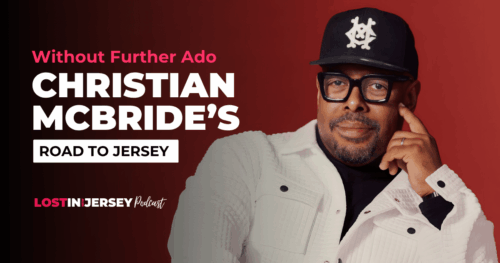

Nine-time Grammy-winning jazz legend Christian McBride joins Lost in Jersey for a Jersey and jazz-filled conversation about his new album Without Further Ado, Vol. 1, his upcoming show at the TD James Moody Jazz Festival at NJPAC, and how he went from saying “I never wanted to move to Jersey” to calling it home.
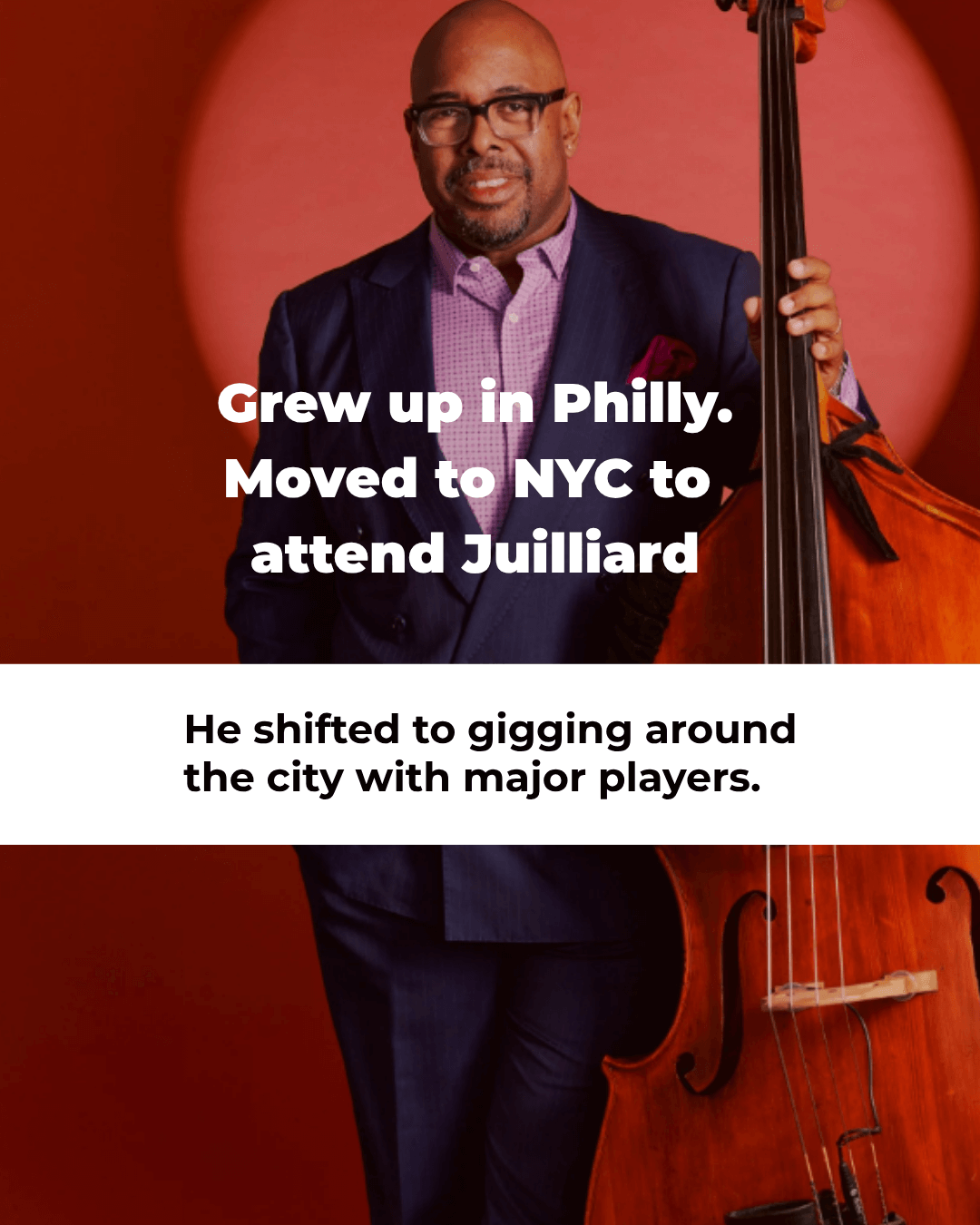
Originally from Philadelphia, McBride crossed the Hudson for love and never looked back. He and his wife, vocalist Melissa Walker, built Jazz House Kids in Montclair, New Jersey — one of the country’s most inspiring music communities.
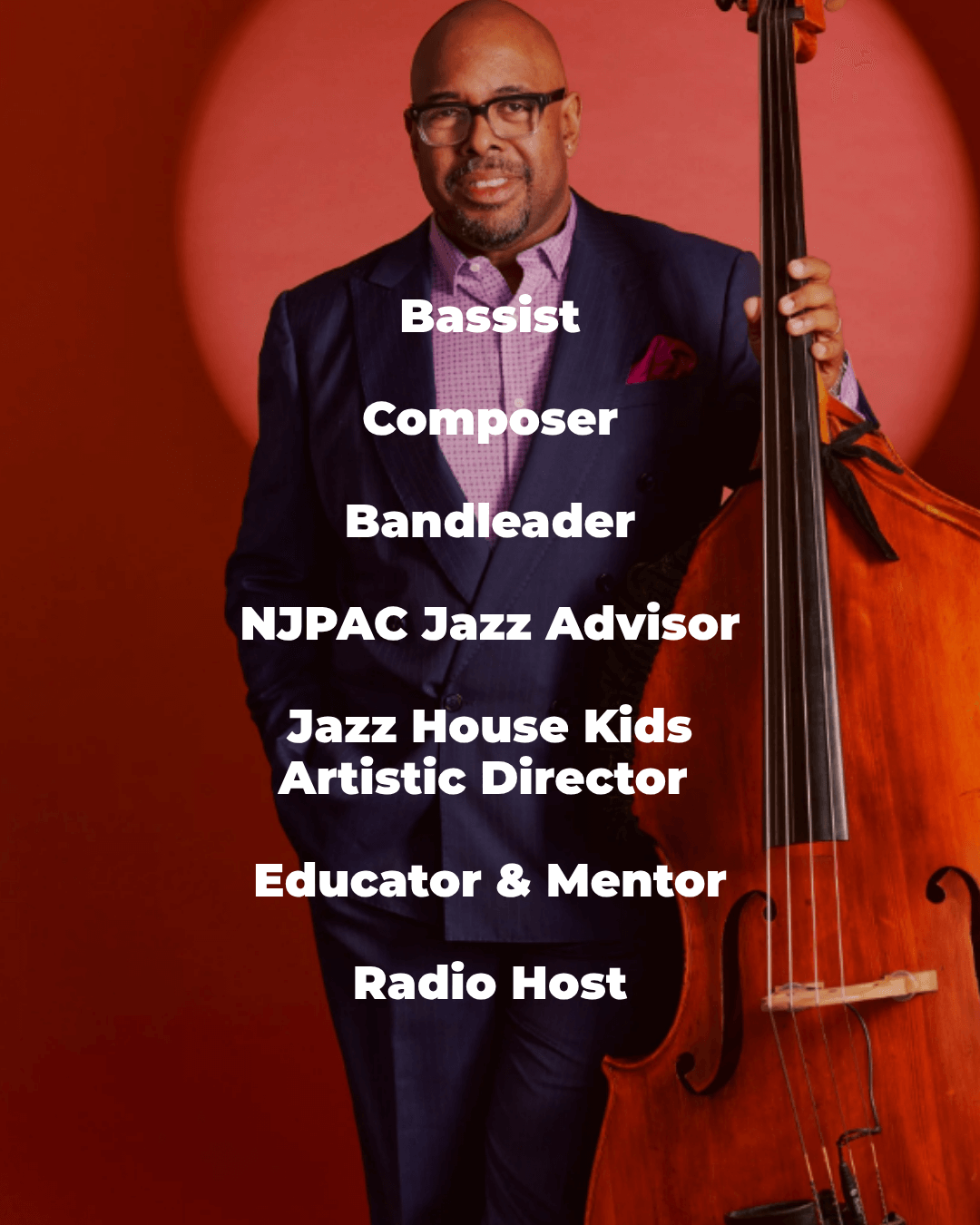
McBride is not only one of the world’s greatest jazz bassists, bandleaders, and mentors, he’s also Artistic Advisor for Jazz Programming at NJPAC and Director of the TD James Moody Jazz Festival, helping make NJPAC one of the nation’s premier jazz venues.
We talk about his upcoming show featuring music from his beautiful new album Without Further Ado, Vol. 1 — which began as big-band arrangements for NJPAC’s gala concerts and now captures that same live magic on record.
🎟️ Get tickets to Christian McBride’s Big Band live at TD James Moody Jazz Festival on November 21, featuring Andra Day, José James, and Ledisi.
🌊 Then set sail on his first-ever jazz cruise, McBride’s World at Sea, from January 20–27, 2026, at McBridesWorldatSea.com
🎧 Tune in to hear Christian’s road to jazz, Jersey, and what he’s up to now.
Listen
Watch



🎷 Life & Philosophy
“All of life is improvisation. You can plan, but something will happen where you have to react — that’s jazz.”
“How you react is based on what you’ve practiced, what you’ve studied. So life in general is jazz.”
“You can’t get better at anything unless you practice. Doesn’t matter what it is.”
“When you listen — really listen — you learn how to connect.”
🎵 On Music & Arranging
“For me, it’s simple. My arrangement should serve the vocalist, not the other way around.”
“If the singer feels comfortable, the song will always work.”
“You need the bass and drums to be one instrument — that’s the heartbeat of any band.”
“We could sabotage you if we wanted to — so it’s best to be kind to your bass player.” (laughs)
🏡 On New Jersey & Home
“Man, I used to swear I’d never move to Jersey.”
“People who moved to Jersey — I thought they couldn’t handle the city.”
“Then I met Melissa, fell in love, and the next thing I knew — I was on a bus from Port Authority to West Orange.”
“We said it out loud — she hated New York, I hated New Jersey. But love wins.”
“Almost every musician I knew was living in Montclair — and now, I get it.”
“When I go into Manhattan now, my first thought is my exit route.”
🎓 On Mentorship & Jazz House Kids
“Melissa started Jazz House Kids so every child could have access to music — no matter what they had.”
“When I see these kids grow up and take the stage, that’s everything.”
“We’re just trying to give back what we were given — community, mentorship, and the joy of learning.”
🎺 On Legacy & Impact
“The great thing about jazz is that it’s forever evolving — and so are we.”
“You can play a thousand notes, but what people remember is your sound and your soul.”
“I’m blessed to have one foot in the tradition and one in the future.”
🛳️ 🎤 On What’s Next
“It took over two years to make this new album — Without Further Ado.”
“We recorded across New York, LA, and London — all about connection.”
“Now we’re taking the big band to NJPAC for the TD Moody Jazz Festival.”
“And then in January — my first cruise. McBride’s World at Sea. Everyone’s coming. That’s gonna be one serious jam.”
Hey there.
Hey, what’s good?
The man of the hour,
big
legend,
Mr.
McBride.
I don’t know about all that.
Oh,
yeah,
I mean, we’re pretty sure.
It’s a pleasure.
You are a nine-time Grammy winner.
Yeah.
Thank you.
I hope, I hope you enjoyed
at least
most of what you heard.
All of it.
All of it.
All of it.
I was like trying to get to the bottom of
how I think you have done 16 albums and
you’ve had done about 300 plus.
Uh, you were a sideman on it. How
we can’t get through it all, but everything
that we’ve heard
is incredible.
So I can’t believe how much you have done.
One thing I want to point out though, is
that you’re,
I’m a rookie. I know
I’ve paid the bass clarinet like for two
years in junior high school.
So when I was watching the Tiny Desk
concert online, your bass clarinet or
clarinet player stood out to me.
I was like, oh, he’s so good.
Yes, I agree.
But
Rachel is a classical violinist.
Yeah, I’ve,
I’m a classical violinist.
I played Suzuki Method since I was three
and a half.
That’s how I was trained.
That means you have a great ear.
I do.
I have a great ear.
I would say the, the bummer about that was,
um,
you know, once I got to college and play, I
played in the symphony there for a year
and then I said,
I really don’t want to do this anymore.
Classical.
So I had friends who were doing, um,
bands and
so I joined bands.
They would have to play it for me.
what
they wanted me to play,
play it
on the keyboard and then I’d play it fine
for them.
But I was not great at like playing the key
of C or
I was like, no, that, that my brain can’t
do that on the fly. It’s
totally fine because
the real truth is,
uh,
you can’t get better at anything unless you
practice. It
doesn’t matter what endeavor it is, you
know? Mm-hmm.
It’s interesting.
That’s so true on every little thing.
I was at a wedding this weekend and I saw
this woman across the way that
wasn’t talking to anyone.
And I went over there and I talked to her
and I told her that I
used to be like her.
And I said, but ever since we started doing
this podcast over, we’re over like almost
150 episodes, you have worked the muscle of
talking to people,
and you just get better and better.
Okay, so the conversation might stall,
but you know how to go to the next level.
And I’m imagining that that’s kind of
the art form in some way with everything,
such as with music, I would assume.
Absolutely.
That’s correct.
Yeah.
It’s like a little bit of a jazz event, you know,
it’s like improvising.
Well, I mean, all of life is improvisation.
I mean, you don’t really know what you’re
going to do.
I mean, you can plan,
but something will happen where you’ll have
to react a certain way.
Mm-hmm. and.
How you react is based upon
what you’ve studied, what you’ve learned,
what you’ve practiced, you know,
therefore your reaction will be
more informed, more educated. So
I like to say life in general is jazz.
Yeah,
I like that. It is.
That makes sense to me.
Well, that’s a kind of a curious thing.
I mean, we want to get into your
background, but since you said that, I
mean, I know that you do improvise, but do
you think ahead? Do you plan ahead when
you’re playing? You have to, because when you are
playing a song and you’re improvising,
you’re improvising within a structure
that involves certain chords,
a certain number of bars,
you know, so it’s not just
free form play whatever you want.
You’re playing something based on the form,
the structure, and the chords,
you know,
in that sense,
yes, you most certainly have to think ahead.
Right.
It’s like a conversation, just like, for
example, this podcast, we kind of have a
structure.
We know we’re going to talk about a few
things. We know
the overarching concept is that we’re going
to talk about some New Jersey.
We’re going to talk about your,
your background.
We’re going to talk about
your journey and, you know, what you’re
doing next
because
it’s kind of It is a conversation jazz,
right? That’s correct.
Yeah.
Yeah.
You also do arranging and composing, and
we’ve been listening to the big band album
that’s out now.
That’s, um,
without further ado, part one.
It’s so good.
Uh, when you’re arranging certain things
that have a vocalist, do you feel you’re
looking at that and arranging differently
than when you don’t have a vocalist or are
you treating horns like a vocalist, uh,
because they have a melody? Well,
uh, Uh, with vocalists, it’s very important
for that vocalist to feel comfortable.
Uh,
I know a lot of arrangers who feel that
their arrangement is the most important thing.
Like
it is important for the vocalist to learn
the arrangement of that person.
I’m the other way around.
I want my arrangement
to fit the vocalist.
So I usually talk to anyone I’m writing for.
It’s like,
Hey,
What kind of vibe are you looking for? You know,
um,
how can my arrangement serve you?
You know,
because for me, it’s sort of, it’s, it’s
practical.
If the vocalist knows
that the arranger wants to serve them,
they’ll trust me and they’ll, they’ll want
to work with me again and again
and again.
Absolutely.
Because they know that I’ll
listen.
Absolutely.
You know,
you’ll listen, they’ll feel comfortable
with you.
That’s right.
Now, I, I think with, uh,
with horn players, all of this varies.
You know, you, you have, um, certain horn
players who do like a particular thing
played by.
behind them.
So I’m a more freewheeling.
Same thing with vocalists.
I do find that most of the time
vocalists like to have a very specific
thing behind them
so they can feel comfortable, so they can
interpret the song the way they want to
interpret it.
But then you have somebody like Diane
Reeves, who is such a master
What she does,
she won’t say this, but her talent says,
you can do whatever you want behind me.
I got this.
I can hear it.
I got
this.
You can’t smoke me.
And like,
she’s one of the only vocalists I know
who’s, who’s that fearless
and who’s that, who’s that capable.
I listened to that song multiple times.
I was like,
she takes you places.
Well,
that whole album
is it, I was telling Rachel, it’s like it,
it’s that throwback so much, like as a lot
of jazz is, but you really, it transports
you back in time, but in a fresh way.
And I was saying that
for some, a lot of people, you know,
there’s jazz periods of their life that they
really got immersed in jazz and they were
like listening to, you know, all the
greats, Mingus, you know,
Coltrane, everything, you know,
Dexter Gordon, whatever it may be, they
were just immersed in
it.
And then it kind of, a
season passes, right? That you’re not maybe
listening to it as much as you used to.
And then when I listened to this album, all
of a sudden I was like,
you know, I forgot, you know, I forgot and
bring it back, bring it back.
And it really had that in a fresh way.
Well, thank you.
Well, it’s, it, it took
over two years in total to make the album.
As you
may have noticed, the album is called, um,
without further ado, volume one. Yes.
Which would imply that there’s a volume two.
So we actually wound up
recording both volumes over that two plus
year span.
Uh, when you start trying to get a bunch of
vocalists who live in various different
places, uh,
uh, scheduling can be an absolute
nightmare.
So, uh,
some of the vocalists were live with us in
the studio in New York.
Some overdubbed their parts in LA and
England, and we had to send the tracks here
and send them there.
And, you know, so
the origin story of how this record came
about was, uh, directly related to my
involvement with NJPAC.
We interviewed the president of NJPAC
recently was a, he talked about you.
Oh, John is, John is my man. Yeah.
Yeah.
He said he just saw you and you’re a little
kid in Philly.
That’s correct.
He said, who’s that guy up there? He,
you’re a
prodigy.
I’m, uh,
I’m grateful for his friendship and, and to
have known him for more than half of my life.
When he became the CEO of NJPAC,
he immediately called me and said, uh, I
would like a jazz advisor here.
And, uh, I
I think you’re the guy for that role.
So since then, for our annual gala, my big
band serves as the house band, and we’ve
invited all of these incredible vocalists
to come and perform either at the gala
or one of the TD James Moody Jazz Festival
concerts.
So since 2012, I’ve
had to write numerous big band arrangements
for all of these singers that are coming
with the big band.
But
the flip side of that
is that
these arrangements only get played once.
We play ’em at the gallery and that’s it,
you know?
And so I just noticed that
I just kept this growing stack of music
that I had written through the years
for these NJPAC galas.
And I thought,
it’s really a shame that these are going to waste,
you know? Yeah.
Uh, I should record these.
And so that, that’s what you hear
mostly from the new album. Oh,
that’s so great.
Yeah.
What a good origin story at the festival
that’s coming up, the,
the Moody Festival that you’re gonna be
having your 17 piece band there.
Is that correct? That’s
correct.
With special guests singing, are you gonna
be singing off of this album or are you
gonna be doing a
more new arrangements? Well, uh, uh,
a, a little bit of both.
So the, the special guest that will be with
my band this year,
forgive me for not knowing the date.
I think it’s November.
It’s November 21st.
Thank you.
Thank you. You’re
welcome.
Uh, the special guest will be Andra Day,
Jose James, and Ledacy.
Jose James, of course, is on the new album.
He sings Moan.
So I’m sure we’re gonna be doing that.
I’m Yeah, I’m
sure you are.
We’re gonna be doing that.
Andrea,
we, we’ve worked together
in the past, but I haven’t written any big
band arrangements for her.
So this is gonna be,
uh, a really fun maiden voyage for the both of us.
Um, powerhouse. Oh,
keep something else. Yeah.
Now let us see,
even though she’s not
on my new album, I’m on her new album,
which is a big band records.
It’s a tribute to Dinah Washington. And,
uh,
her album was released two weeks after mine.
And so, uh, I produced it, I arranged it, I
did all of the orchestrations.
So we’re going to be playing some music
from her new album.
which I arranged. So, uh,
it, I, I can’t wait for that also.
That’ll be a blast.
I mean, 17 people, 17, you know, I’m sure,
and more are involved in this.
That’s a big, uh,
group to try to coordinate.
You must be, my, my band members live in
New York and, and, and, you know, we’ve
been playing together now for
a good
15 years almost.
The core of the band has been together for
15 years.
So we know each other extremely well by now.
So you probably have a shorthand.
I know that just playing with my band over
the years,
my friend Deb is the one who sort of runs it.
She plays piano, she sings and she plays
guitar.
She’ll just look at me and I’ll be like,
oh, I know what that means.
I know, I know.
I get to sweat.
I start sweating.
I’m like, oh, okay, okay, give me another shot.
You know, that’s interesting.
Is Deb considered the lead of the band? She’s
kind of the director.
Oh yeah, because she’s a musical genius.
Like she can hear,
we’ll be playing a rock song and she always
adds violin in and she totally arranges
everything.
The bassist or guitarist will play one note
that is just not right and she’ll say, stop.
You
play that line again.
And it, she’s right.
Every time she, she hears it.
Well, that’s the thing though, is it’s
usually the sing, the lead singer or
somebody that’s the head of the band and
you’re the bassist and you’re,
you’re the head that you’re usually kind of
in not.
How did that come about? How did you
rise to the place where you are now the,
you are the heartbeat, you are the
conductor of
the bands? Well,
I gotta tell you, the bass player and the
drummer have always been the
rulers of the band.
Don’t let anyone ever tell you any
different.
It’s very true because if we’re not
following the baseline or the drums, we’re
off and it’s over.
So
did everybody look to you in the, in, in
the early
days, look back at you, go, are we doing
this right? I wouldn’t go that far.
I just mean that the bass and the drums
are, are really the, they’re
the heartbeat.
They’re, they’re the,
they’re the engine, you know? Yeah.
And so for any music to be successful, you
need the bass and the drums to be one
instrument.
Um, so there’s a lot of pressure on the
bass and the drums, but at the same token,
I think that most band leaders should be,
they, it would be smart for them to be kind
to the bass player and the drummer.
Cause we could,
we could easily sabotage you if we want.
Oh, we’ve had the sabotage for fun when
the, um,
drummer decides that he’s in an excellent
mood and just super happy and all of a
sudden plays a little bit too fast and
we’re all just trying to keep up
that can’t happen.
You know,
and then you get those band leaders,
somebody like, uh,
Betty Carter, rest her soul.
You know, she was, she was relentless.
She was always all over the rhythm section. Yeah.
Come on fellas.
You know,
you have to follow her heel.
That’s where she wanted the time.
You know,
I, I think just for me, there’s a notion
that it’s rare that the bass player is the
band leader, but, uh,
There’s always been a lot of great bass
playing band leaders.
You know, you mentioned Charles Mingus
earlier, probably the most popular one, but
you’ve had Ray Brown, you’ve had Jocko
Pastorius, you’ve had Marcus Miller,
Stanley Clark, who’s coming to TD James
Moody Festival this year, all kinds of
great bass playing band leaders. So, uh,
I’m just one of many.
You know, you grew up in a musical family,
right? I mean, you’re, you’re
have,
you have bass players in your family. Yep.
My dad and my great uncle. So,
uh, I’m in the family business. Yeah.
I started playing the electric bass when I
was nine and started playing the upright
bass when I was 11.
Did you ever
like rebel and want to, no, I don’t want
the bass.
I want something else or, you know,
you just love me.
No, I mean, when, when I got to middle
school and had to play in the school or
orchestra,
I ironically did not pick the double bass.
I wanted to try the trombone because my
musical hero already was James Brown.
And some of my favorite moments on James
Brown’s records were the trombone solos of
Fred Wesley.
Ah.
So I wanted to try to play trombone like
Fred Wesley.
Uh, but when it became painfully obvious rather
quickly that I had no talent for the
trombone,
Uh, the brass instructor said, well, you
play the electric bass, right? I
said, yes.
He said, well, why don’t, why don’t you
play the upright bass? I went, ah, I
don’t, I don’t wanna play the upright bass.
He says, well, you know,
give, give me the trombone.
You should try to, you should try the bass,
you
know?
So, uh, he nicely
coaxed the trombone out of my hand and I
kind of,
you know, sulking,
went into the bass room.
And then it took a, it took a while, but it
grew on me and I came to love it. Oh,
that’s, it’s so great to hear that because
it’s always so interesting when you meet
someone so talented at an instrument and
you wonder, you know, were they always just
attached to that instrument? Did they try
anything else? Like, how did this happen where
it’s like you meet your soulmate of an
instrument and, and why, why that one? Right.
You know?
It wasn’t love at first sight.
Not really ,
you know,
but
you know, cause I thought the electric bass was
the coolest instrument in the world, you
know, just
playing the bass
guitar, you know? Yeah.
Thought one day I would get a gig with
James Brown or, or Michael Jackson or
somebody like
that, you
know? Yeah. Um,
and you can’t do that with an upright bass,
you know? So.
Uh, when I started playing the upright bass,
you know,
like I said, it, it, it took a minute, but
then my great uncle said, uh,
well, now that you’re playing the upright
bass, I got something for you.
So I went over his, his house and, uh, he
had a big, huge stack of jazz albums
waiting for me.
And, uh,
you know, I was 11 years old, so my initial
reaction was kind of like,
oh no.
Well, that’s true.
You’re like, why
do I have to
be intense? It’s like homework here.
I gotta listen to
the jazz albums. Oh
man.
You know,
but
the way he presented it to me,
uh, I was
deeply in love with jazz by the end of that visit.
And I had always associated probably
because of him.
I had always associated the upright base
with jazz, and then
I I realized after that visit
that not only was jazz
really good music,
but it was really cool,
you know, like,
because my great uncle is cool, you know,
like everything about him, the way he
walks, the way he talks, his,
his mannerisms.
And I just thought, well, if jazz makes him
that cool,
then I want to be cool too.
Yeah, it is cool.
That was
smart.
It’s like a random question about the, the
instrument, because
I, I obviously I played in orchestras
growing up for so long
and it’s such a massive
like physically big instrument
and you travel so much and you play
everywhere.
Do you bring your bass with you everywhere
or do you have like a favorite bow that you
bring instead that you’ll borrow other
people’s basses? What I use now is it’s
called a
flyaway bass,
because of the
way traveling has been over the last,
uh, I would say, particularly in the last
15 years, the restrictions that keep coming
up on like what you can bring and what you
can’t, they just made it virtually
impossible for musicians to travel with
their own instruments anymore.
Uh,
I can remember my very first tour in 1990. I mean,
you know,
I Our drummer brought his entire six piece
drum kit,
two cases.
I had my bass in one of the big,
you know, fiberglass coffins that we used to.
Yeah.
And,
uh, our saxophone player had his alto
saxophone, a soprano saxophone.
Like
we probably had
20 pieces of luggage between the four of us.
Right. Right.
And, uh, you can’t do that now, obviously,
you know, so there was a company in
California.
called lemur, like, like the animal lemur.
And they started making bases that come apart.
I can’t
even imagine this. It’s
an engineering miracle.
It is an engineering miracle because it
isn’t the whole point is like the body and
the wood type and the, and the sealant and like.
So,
yeah.
And so there were a couple of people
in around
2007, 2008 that started experimenting with
the these,
these ways that you could travel with an
instrument that comes apart.
There was a guy named Charlie Chadwick in
Nashville of the Lemur Company in
California.
And they just had these various prototypes
where you could take the, you could take
the neck off
the, as, as you all know, being a
violinist,
the body of the instrument, that that’s all
wood.
That’s all pressure on wood. So
with the bass, you know, how the sound gets
from the front to the back is the sound post.
And if there’s no pressure on the front of
the instrument, that sound post is going to fall.
And so I thought, well, how can you make
a bass that comes apart where you take the
bridge off, you take the neck off, there’s
no pressure on the front, so the sound
piece is going to fall.
The Leemer Company puts this little tiny
thumbtack in the front of the instrument
that, and a little adhesive on the bottom
of the sound post that keeps it from
falling when you take the bridge off, you
know? Oh.
That’s just such a simple solution that seems
incredible
that it would be that simple.
So you could sort of
take off the,
the neck and take off the neck.
Now, the only drawback is that you have to
detune the instrument every single time you
play.
Of course.
And then, so your strings aren’t gonna be,
you have to use, oh,
then retuning and then it is such a pain.
It’s the
worst.
Can I say the A word?
Yeah.
It’s
such a pain in the ass,
you know,
but,
but on the flip side
is that I can travel with it.
At least I know what I have, you know, it’s
a full size upright bass, but you just have to
take it apart every gig, you know,
uh, it has like a little chart inside of
the case, you know, so we,
Like Ikea, like how to put it together.
We, we, we started calling with the Ikea beans.
Yeah.
Oh my
God.
Oh my gosh.
I’m gonna need to go online and see how
this works.
You have to check that out, Rachel.
Well, what I wanna do for the listeners so
that they know
your
journey to New Jersey.
I know that you came from Philadelphia
originally, then you went to Juilliard
for a year. Yes.
And you started getting a lot of phone
calls to come play gigs and then left
Juilliard.
Can you tell us about that, you know,
and transition that you made?
Sure. Um,
once I fell in love with jazz, it became
obvious that if I wanted to be in that
circle with all of these great musicians
who I admired on recordings, I had to move
to New York because they all lived in New York.
Even though Philly is not that far from New
York, I just felt that in terms of
opportunity of where I wanted to go,
it was a completely different universe, you know?
Yeah.
And, uh,
so I could not wait to move to New York city.
So I, I,
I went to Juilliard, you know, within that
first year
I started playing gigs with the great alto
saxophonist, Bobby Watson.
And I also met my,
my dear friend, Roy Hargrove, and his
career started to blossom around the same time.
So I finished my, my freshman year.
I went on the road with Roy Hargrove and,
uh, while I was out on the road with Roy, I
I also got an opportunity to start playing with
the legendary Freddie Hubbard.
And so
it was obvious to me that I was like, well,
I’m not going to be able to do this both
and school. Yeah.
So I have to make a decision here. So, uh,
you know, I, I had a,
a very difficult conversation with my,
well, it wasn’t a difficult conversation.
It was just difficult getting the nerve
to tell her
that I didn’t want to go back to school.
Mm-hmm.
But after we had a talk, she was, she was
very, very, very cool.
And, um,
yeah, I didn’t just started my career going
on the road and
playing with all of these musicians who I
greatly admired, but specifically moving to New
Jersey, you know, I, I’d only lived in two
places my whole life, Philly and New York
city, you know, and I lived in numerous
neighborhoods when I lived in New York.
Uh, I lived in Harlem, I lived in Brooklyn,
uh, I lived
in Murray Hill.
I lived on the Upper East Side for,
uh,
almost 10 years.
And so, uh, the last place in the world I
ever thought I would move to
New Jersey.
That’s usually what most people say,
including what we
said.
Yeah.
Before we moved here.
Man, I ain’t moving to New Jersey, man.
Like people who moved to New Jersey, I
thought, I was like, you know, it’s like,
you know, they can’t handle the city, you
know, uh, they,
they’re soft, you know,
you know,
gonna start that old corny family life with
the house and
the, you know,
the car and the kids.
Why?
You know, I tell a funny story about that
because I,
I thought the exact same
thing.
Yeah.
But when I, when I moved out here and I was
still, you know, like,
I don’t know if I’m gonna be able to hack it.
I was, had my kids in a preschool
and I was waiting in line to pick up my kid
and there was a woman that was checking
her, like
de enrolling her child.
She said, she’s like,
we’re moving back to the city.
We just can’t do it.
And all of a sudden I was like, this is a
challenge. Yeah.
Okay. That
was a throwdown for you.
You’re weak,
weak woman going back to the city.
I am going to
stick it out. It
was like, I flipped it,
you know?
Yeah.
I, I had no plans ever to,
you know,
I,
I thought of New Jersey as one long bridge
between New York and Philly.
I’m sure. Yeah.
And, um, I
I, I had deep respect for Newark.
I knew a lot of, I knew a lot of people in,
in, in Montclair.
I knew a lot of people in Teaneck and
Inglewood, west New York, but you know,
Weehawken, but I’m not, I’m not moving
there, you know?
And, and then I met Melissa, my wife,
Melissa.
Yeah. And,
uh,
when we started dating, she lived in West
Orange.
And I remember going to visit her a couple
of times.
And, you know, I’d go to Port Authority
somewhere I’d never really had any real
reason to go
to.
It’s not
the nicest place in the world.
Not the nicest place,
you know?
And so I would go to visit her.
I’ll take the bus from Port Authority and I
would think, well, now I know I’m not
moving to New Jersey.
This, this bus situation.
She should seal the deal.
I am not coming.
Yeah, this
is
crazy.
But then, you know, Melissa and I, I fell
in love and, you know, we decided to get
engaged and we thought, uh,
okay, well, how are we going to handle this,
uh,
this living thing? Like
it, it, it really be, it really became an
issue, you know,
she said, well, she
said, I, I hate New York.
I said, well, I hate New Jersey,
you know,
and, uh,
she said, well, we gotta figure this out.
You know,
that’d be a good jazz song.
I hate New York and I hate New Jersey.
Let’s, let’s
get it.
Let’s get
on it.
Let’s fight.
And,
you know,
some, some pragmatism came into play.
I thought, well, you know, seriously, like
she had a really nice house in West Orange.
And even though I had a very nice, I had a
two-bedroom, two bathroom apartment, but
still like, I don’t, I don’t want to get
married and live there. Okay.
Let me be real, you know, for the kind of
space that we would want.
It’s not going to happen in New York.
So
I thought, well, okay, I can’t believe I’m
saying this.
I can’t believe it.
Okay.
I’ll come to New Jersey, but
we got to find somewhere
really cool,
you know,
and, uh,
we settled on Montclair.
Because
almost every musician I knew,
a lot of musicians who I was, I was
particularly close with, uh,
lived in Montclair and they say, Hey man,
we felt the same way you did
and we don’t regret living in Montclair.
And I have to say it has been exactly, it’s
been 20 years and
two months since Melissa and I
moved to Montclair
and Wow.
When I come into Manhattan now, my very
first thought is my exit route.
I have the same thing now.
I used to really be sad to,
you know, I was so sad to leave the city
too, but when I go in, I’m excited to be
there, but I am very excited thinking at
the end of the day, I’m gonna be back here.
Go home.
That’s right. Yep.
Mm-hmm.
You know, I’m curious.
Do you still feel like when you go to the
city, I’m sure you go there to the studios
and have
a lot of sessions in the city, right? Is
that where you do most of your jazz
sessions?
Does it feel like it used to or has it
changed? And is that also changed? Yes,
that part has changed also because when I
first started
doing a lot of recording sessions in the
early nineties,
Obviously there was still a lot of big
record labels.
You know, you have Verb, you have Blue
Note, you had RCA, you had Arista,
you had
Electra,
Atlantic,
and a lot of independent labels.
Obviously this was before streaming and
YouTube and all that kind of stuff.
I was averaging
15, 20 albums a year.
So I was in the studio all the time.
And when you, when you have that sort of
studio life,
um, now what I’m describing was nothing
compared to what the,
the,
the generations before me did.
I mean, they were probably playing
on 15,
20 albums a week.
Yeah.
That’s nuts.
I don’t
spend as much time in the studio as I used to.
I mean, the way it happens now, a lot of
people have home studios.
There’s a lot of
small studios.
So like somebody will send me a track and
say, Hey, can you put a bass part on this track?
And, you know, I’ll go to somebody’s house
or record it in my basement, you know? So
that’s,
that’s, that’s the studio life now, you
know, is it, I was gonna ask you that when
you’re talking about the big band
recording, is that,
that was It’s different.
Doesn’t it? I know, but you were saying
some tracks were laid down, like the vocals
were laid down
separately, but like,
doesn’t that feel so different when you’re,
everyone is in the studio versus
then you
add it later? Yeah.
Oh, absolutely.
You, you prefer it to be in person, but you
know,
sometimes it works out where you just can’t
be there in person.
You have
to, yeah, you, you just, you, you piece it
all together and
the musicianship of that particular person will.
make it feel like that they were there. So,
you know, it,
it works out, but, you know, to, but to
answer your question about,
you know, it being different now,
if you talk to some young musician who’s
24, 25 years old, I’m sure they will tell you
things are great.
I got my own scene that I’m working with
now, you know, so like,
um,
It’s, it’s all about perspective, you know,
cuz I look at
like this young musician, like, you know,
somebody like, uh,
Julius Rodriguez, who’s a, an incredible
young musician.
He’ll never see the kind of scene that I
came up in, you know, playing in studios a
couple of times a week or, uh,
going to Bradley’s or Sweet Basil or the
Village Gate, you know,
but he’s got his own clubs that he’s going to that
I probably won’t go to.
That’s
true.
That’s true. Yeah.
Well,
so here in New Jersey,
you’re part
of the
Jazz House Kids.
Your wife, Melissa, started that here.
I think it, what year was that? Like 2002?
It’s been a while.
Correct.
And it is bringing up a whole new
generation and the kids that go there, they
are so talented.
It’s amazing what
you both have done
for the,
you know, up and coming generation is that
you’re like the artistic director, I
believe, correct?
Right.
How do you feel
about seeing this next generation and
without them being able to be part of that past,
do you feel like there’s
a, a different style they’re bringing
forward or
do you, do you feel like there’s something
new breaking out? I don’t even
think, I don’t know if we think about what
kind of style they bring.
What’s most important for us is to see that
they have this
dream of playing music and they can do it
because they’re
The reason why Jazz House Kids started in
the first place is because of this vision
Melissa had when she got called to do a
masterclass
for some elementary school kids in Newark.
And, you know, there’s no tougher crowd in
the world than elementary school kids.
Oh,
yeah.
And, uh,
she fell in love with them.
They fell in love with her.
As has always been the case in America,
a lot of public schools lost all of their
arts funding.
And if you wanted to play music
and you were in
a community of lesser means, chances are
you wouldn’t be able to play it.
Your school either didn’t have a music
program or, you know, they got rid of their
music program, or if they had a music
program, the instruments were probably in
poor condition.
You probably didn’t have a lot of music to
choose from.
There might not have been an orchestra, you know,
just a small,
you know, a, a smattering of other kids who
wanted to play music.
So, uh,
Melissa took it upon herself, like, well,
I’m going to create something that kids can
have so they can learn about this great
American art form
and do something
other than just be out on the street and,
you know, to see
what Jazz House Kids has accomplished from
that time.
up until now,
I applaud Melissa every single day for
creating this,
you know,
and to see that some of the young leaders
in jazz right now came out of our program,
you know,
Zohar and Adam, Isaiah J.
Thompson, Emmett Cohen,
Zoe Abadia,
Kaylin Cardello,
I mean, it’s, it’s incredible who
is out there right now who has come through
our program. Do the,
the people that come through your program,
are they usually local people in New
Jersey? Uh,
or do they come from other places?
Throughout the school year, yes.
But we have a, a summer program now.
Summer program. Yeah.
Yeah.
And the summer program, we get kids from
all over the world.
We’ve had kids from, uh,
South America. We have
a, uh,
an exchange
program with a organization in London
called Tomorrow.
Warriors,
uh, which is
Jazz House Kids and Tomorrow’s Warriors
does a similar thing.
So we’ve sent some of our kids to London.
They’ve sent some of our kids over to, over
to Montclair.
So that’s cool.
Yeah.
Is it hard to get in? Is there like a
audition process? You could just, if you
wanna do it, you can just come.
Please just come.
That’s how we created it. No, no.
I mean,
doesn’t, doesn’t matter what,
how much money you have.
We, we just need to know that you have some
desire.
We’ll get you. That’s
amazing.
That’s amazing.
And it can be a beginner level as well.
Like you could.
Absolutely. Okay.
That’s great.
That’s great.
What is the youngest students that are
there right now?
I’m not sure, but I’m guessing it’s
probably either nine or 10.
We had them as early as four at one point.
We had a program that we were doing with
Jazz in Lincoln Center. Was
it called
the Bebop Babies or something like that?
That program
lasts, ’cause like I said, we were doing it
in a partnership with Jazz Lincoln Center.
Well, the work that you’re doing
through
this program here in Montclair and also the
work that you’re doing at NJPAC,
and also it’s an education system as well
there at NJPAC.
It seems that you’re helping bringing the
arts back.
If it’s not in the schools,
it’s good to see you.
Into the community.
Mm-hmm.
But it’s still coming into the community.
That’s right.
That’s right.
I mean, that’s, it’s necessary.
That’s what I came up in.
When
people look at my peers,
you know, we were the
recipients of
a school system in the community
that was rich in music education programs.
Mm-hmm. So
that’s our job to, to give it back.
Mm-hmm.
Yeah.
And as you know, I think when we were
talking to
John
at NJPEC, he was,
the thing that really stood out is that
for me
was, you know, people talk about how are
you going to help the community and how
you’re going
to
raise
a whole city out of, you know, poverty
basically.
And who would think it would be the arts
that are going to do it?
Yeah.
And this week, actually, I have a good
friend up,
um, who grew up in West Virginia, Kentucky,
that area,
she’s up for the conference at NJPEC.
pack right now, um,
which is for community healing through art.
And it’s an amazing conference all week.
So she’s staying with me to go to that. Nice.
Yeah.
Nice.
So it’s good to see.
Well, I highly recommend everyone listen to
your latest album.
And of course, if you aren’t already every
day, like you are in jazz all the time, if
you have
by chance, like me, put it on the back
burner and have been listening on whatever
is the hottest thing on Spotify, there’s a
reminder
that put it back in your
Put it back in your rotation with this
album and,
and also come,
come get tickets on November 21st so they
could see you.
Please.
Yes.
Oh, oh, and I, I also would like to
mention,
uh,
that I have my first cruise
that sets sail in January.
I read about that.
Explain that.
Okay.
What is this? I didn’t see this.
What is it? Yes. Yes.
McBride’s World at Sea.
which
is
January 20th through 27,
leaves out of Fort Lauderdale and goes to
Falmouth, Jamaica, and the Cayman Islands.
Everybody you can imagine is gonna be
performing on this cruise.
Angelique Kijo, Ledesi,
Cecile McClure Savant, Samara Joy is gonna
be on the cruise.
Jose James is gonna be there.
The legendary comedian, George Wallace,
and
Alonzo Boden, my big band.
my quintet inside straight, my,
my young band, Ursa Major, the
remembering Ray Brown trio with.
Uh, Benny Green and Greg Hutchinson and
Melissa is gonna be singing as well.
So you just were like, I wanna have a
really good party, go to some islands and
be on a cruise.
Let’s, let’s get this, make this happen.
It’s like a huge yacht you have chartered
in some,
you know, creative manner that you can just
Exactly right.
So make sure everybody goes to McBride’s World
Okay. All
right.
We’re putting a link in there. Yeah.
McGride.
You can get a ticket.
And there’s a discount that lasts for only
two more weeks.
So you better jump on it now. All
right.
All right.
We’ll, we’ll, we’ll highlight that.
That’s pretty incredible.
I know that everyone that you listed is
pretty much on your without further ado album.
Yeah.
Right.
And if you don’t know who they are, go to
Spotify, look up the without further ado album
and click through and follow each one of
the people that you have collaborated with
because
each one is fantastic in their own regard.
I, I did that.
That’s what I did. That’s
what I did.
Well, it’s been such a pleasure to talk to you and
to, you know,
know that, you know, that someone like you
is not too far down the block or musical
geniuses around.
Hopefully I’ll see you guys at the, uh,
you On the 21st,
21st COP.
Thank you so much for spending the
afternoon with us.
We really
enjoyed it and the pleasure of all mine.
Have a great day, you guys.
Thank you
so much.
You too.