
What if the moment that nearly ended your life became the one that finally made sense of it?
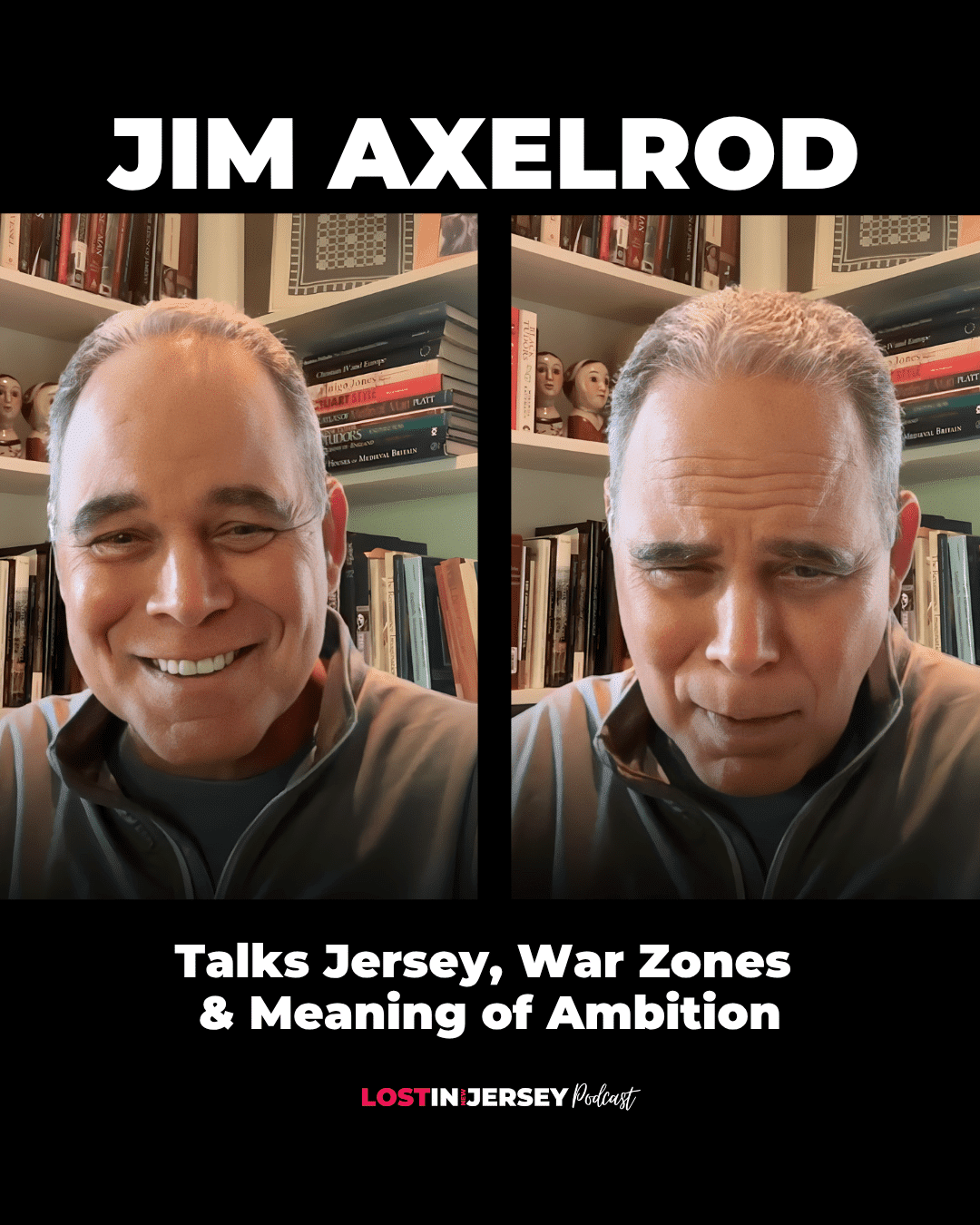
Veteran CBS News reporter Jim Axelrod joins Lost in Jersey to talk about ambition, family, and finding purpose. From Iraq’s war zones to quiet mornings on the Jersey Shore, Jim shares what three decades in journalism have taught him about clarity, connection, and what really matters.
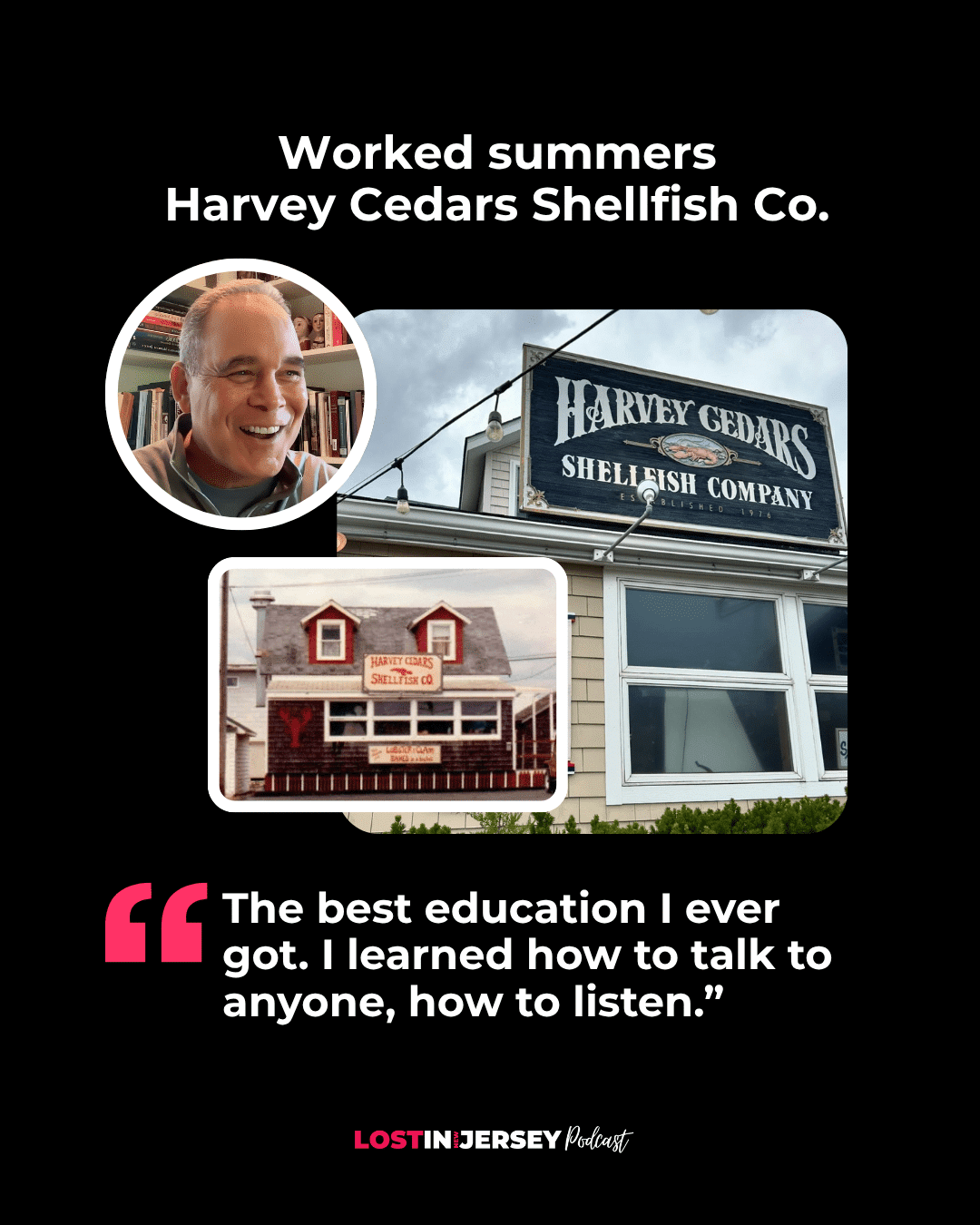
Raised in Highland Park, New Jersey, and shaped by summers at Harvey Cedars Shellfish Company, Jim learned early on how to see people and listen deeply — skills that became the foundation of his storytelling. A near-death experience on a bridge over the Euphrates later forced him to ask the question that still guides his life:
“Why are you doing what you’re doing?”
In this episode, Jim reflects on how growing up in New Jersey prepared him to navigate every kind of room, and how ambition evolves as we grow older. From Bruce Springsteen to family lessons, this conversation is about resilience, reflection, and coming home to what matters most.
Listen!
Watch!



00:00 – Opening Reflections: Listening and Curiosity
01:12 – Jim Axelrod’s Path Into Journalism
03:46 – Growing Up in New Jersey: A Foundation for Life
04:38 – Montclair, Diversity, and Community
05:40 – Family Influence and Personal Growth
07:41 – Discovering a Calling in News Reporting
10:21 – War Reporting and Lessons in Clarity
11:14 – Transitions, Fear, and Finding Balance
13:34 – Ambition and the Question: What Is It In Service To?
17:59 – Authenticity and the Power of Connection
21:33 – The Changing Landscape of Journalism
30:29 – Reflections on Work, Life, and Legacy
35:03 – The Importance of Kindness and Human Connection
37:33 – Finding Meaning in Everyday Moments
38:33 – Closing Thoughts and Gratitude
Janette (00:00)
Jim. Thank you so much for joining us.
Jim Axelrod (00:02)
Thank you for having me. It’s wonderful to chat.
Janette (00:04)
I know you from the neighborhood, our kids from the bus stop years ago. We no longer use the bus stop, but I remember meeting you and Christina years ago at the bus stop and I just adored both of you. And I remember my husband, came home one day and he was like, you really see the skill of a reporter. Like he just pulled it all out of me and like,
Jim Axelrod (00:05)
from the bus stop. Yes.
Rachel (00:25)
you
Janette (00:26)
two minutes
at the bus stop. I was like telling him all my life story.
Jim Axelrod (00:30)
You know what that always
does? That prevents me from having to share mine. It’s much easier to ask other people. It’s a arms length defense mechanism.
Rachel (00:34)
Exactly. Exactly.
Janette (00:34)
Yeah.
Rachel (00:39)
therapist friends have the same mechanism. You ask them how they’re doing and somehow you realize an hour later you’ve just told them everything about how you’re doing and you’re like, wait, they didn’t answer the question.
Jim Axelrod (00:43)
I know. Yes. Yeah. Yeah. I’ve
actually had people say to me, we’re not going to be able to have a mutuality in terms of relationship unless you stop asking questions and start answering Although what happens if you’re just really interested in people? Like, that’s that’s the other thing.
Janette (01:01)
⁓
Yeah.
Rachel (01:07)
I agree. We’re very interested in people, so we end up doing that too wanting to hear
Janette (01:12)
I bumped into you recently. I asked you to come on because you told me you were from Jersey and we want to hear your back story everybody knows you because you’ve been on television. You’ve been a reporter for I don’t I don’t know how many years now, but many.
Jim Axelrod (01:16)
Ugh.
Rachel (01:24)
How long
have you been at CBS News?
Jim Axelrod (01:27)
I am in my 30th year at CBS News, right? So like you didn’t think they were hiring five-year-olds, did you? But I, yes, exactly. Yeah.
Janette (01:28)
⁓ yeah.
Rachel (01:30)
incredible.
Janette (01:33)
That’s right. We’d like to know your prodigy story. Tell us about
Rachel (01:33)
I didn’t, but I’m so glad you were the first.
Yeah.
Janette (01:39)
when you started reporting at five.
Jim Axelrod (01:41)
So, so
actually, I am in my 30th year, but I was 32 when they hired me. So, been a wonderful, wonderful way to make a living for any number of years. it’s funny, the Jersey thing, and this is why I was like, you know, I mean, let’s be honest. You didn’t ask me. I begged you. Can I please be on?
Janette (01:48)
Mm.
Jim Axelrod (02:01)
Because I mean, I could talk about New Jersey all day long. It’s sort of formative and I feel like you get some stuff in life, you don’t get others, right? We all have this sort of, this asset liability balance sheet we all walk around with in our heads. And for me, being born, raised, and now living most of my life in New Jersey is a huge check mark in the asset column. I just love everything about this state.
Janette (02:23)
Mm.
Jim Axelrod (02:26)
and the state of mind that is required for people who live here.
Janette (02:27)
Mm-hmm.
What do you think, having grown up here, what is the state of mind that you think that you cultivated here?
Rachel (02:31)
love that.
Jim Axelrod (02:35)
You know, it’s funny, I think everything that I’ve run into in life, both personally and professionally, obviously I ran into first in New Jersey. I mean, in terms of the kinds of people, I grew up in a small town, Highland Park, which is right next to New Brunswick, the Rutgers campus, 15,000 people, a broad range of socioeconomic backgrounds, race, religion. It was the ultimate mini melting pot.
It was a fabulous place to grow up. It was a great time, late 70s, early 80s, but it allowed me to develop a foundation of how to go out in the world. wasn’t anyone I wasn’t going to be able to talk to. This was a town of 15,000, as I say, but a Nobel Prize winner, Arno Penzias, was in Highland Park. I went to school with his kids. There were people who…
Remember Willie Garson from Sex and the City, who sadly died a few years ago, was a good friend of mine growing up. There were even in this small town, you began to understand if you want to go out and achieve in the world. mean, in my small town of 141, we’re in my graduating class and I think we had Harvard and Yale and a couple of Princeton and
Rachel (03:28)
I do.
Jim Axelrod (03:46)
you begin to understand what is required the rest of the world. I waited tables for 10 summers at the Harvey Cedar Shellfish Company in Long Beach Island. There’s a picture somewhere on the wall there with this big Jufro. But I learned more skills talking to people on the Jersey shore, getting them lobster crab cakes that I use.
Janette (03:46)
Mm-hmm.
Jim Axelrod (04:08)
every day as a journalist, then I learned anywhere else. Certainly better than I learned either as an undergraduate or a graduate student. So New Jersey to me allows to have solid foundation understanding the rest of the
Janette (04:12)
Interesting.
Jim Axelrod (04:24)
you can grow up, thrive and love the people you meet here, this broad range of people from every walk of life, then like you’re gonna kind of be set up pretty well to go out into the world.
Janette (04:37)
Yeah, yeah.
Rachel (04:38)
I agree.
Janette (04:38)
So I wanna ask you, I know I read some of your book it’s a lot about your father and about your career. by the way, it’s brilliantly written and it’s immediately you’re engaged.
Jim Axelrod (04:48)
You’re very kind. ⁓
Janette (04:52)
I I feel like I know you more in 25 pages that it’s so impressive that you’re able to do that. But you talk about your father running marathons at 46 years old who subsequently passed at 63
Jim Axelrod (04:52)
Thank you.
Yeah. Yeah. Yeah.
Janette (05:05)
he was a go-getter.
Jim Axelrod (05:06)
Yeah. And he was in New Jersey. Sometimes if you’re driving around New Jersey and you see the Levinson Axelrod signs there, I always joke my dad’s law firm. It feels like if you don’t mow the lawn in certain places, will pop up and an office will pop up. there’s Levinson Axelrod is all around the state. And he was a wonderful personal injury litigator who people would have their one day in court to plead the case of sort of run into some kind of
Injury or or injustice or malpractice or something and he was the guy you wanted making your case for you He was a jersey guy like there are these things, you know, it’s an interesting point you were I didn’t realize you were from Texas Janet where by the way, we’re in Texas
Janette (05:40)
Mm-hmm.
Yeah, Lubbock, Texas is where I grew up.
Jim Axelrod (05:50)
me just say this. I grew up in Highland Park, New Jersey. I then went to Ithaca, New York. I then went to New Orleans, Louisiana. I then went to Philadelphia, Pennsylvania. I then went to Providence, Rhode Island. I then went to Bangor, Maine. I then went to Utica, New York. I then went to Syracuse, New York. I then went to Raleigh, North Carolina. I then went to Miami, Florida. I then went to Dallas, Texas. All of it.
Janette (05:50)
you.
Yeah. Yeah.
Jim Axelrod (06:13)
was designed to get back to New Jersey. All of it was designed. And when we had to leave here for three years and go to Washington, when I was covering the last three years of the Bush White House, I couldn’t wait to get back. like, And by the way, there are people who feel about, I remember when I was covering the Bush White House, it was full of Texans. And there were people there who couldn’t wait.
Janette (06:15)
Mm-hmm.
Yeah. Yeah.
Rachel (06:24)
you
Yes.
Janette (06:32)
Mm-hmm.
Jim Axelrod (06:33)
to get back to Texas. I get it. We are all a product of, yeah, sometimes you’re running from it and sometimes you’re running to it. I just consider it a blessing that I wanted to run back to it.
Janette (06:35)
Yeah. Of our home state or a home. Yeah.
Rachel (06:40)
our environment. Yep.
Janette (06:42)
Mm-hmm.
Yeah, So When did the transition or the actually start to become a reporter part happen in your life?
Jim Axelrod (06:51)
Yeah.
I made more money as a 15 year old on the Jersey Shore. I don’t think I made as much until I was twenty nine. Like we were making a lot of cash and we weren’t paying any taxes. I was. Now, and then you get out in the world, you’re like, well, first of all, what happened here?
Janette (07:01)
Mm-hmm.
You
Rachel (07:05)
I was a waitress
in Long Island too and I know.
Janette (07:08)
Yeah.
Rachel (07:11)
You’re like, what? This with a degree? Yeah.
Janette (07:12)
Fast cash, yeah.
Jim Axelrod (07:16)
So
I graduated college. I had gone to Cornell. I was 22 chronologically. I was about 15 and a half developmentally. yeah, I didn’t know what I wanted to do. And I just thought it would be a sort of a somewhat productive way to let the dust settle to teach. So I went to New Orleans and taught school there for a couple of years at a great independent school.
Rachel (07:25)
That’s fine. We’ve heard that about boys.
Jim Axelrod (07:41)
Country Day School in Metairie. then I went Philadelphia, did the same thing, Chestnut Hill Academy for a year. Then I went to grad school. I thought I was going to be a history professor. So I went to Brown. I was in a PhD history program and I was awful. Like I was a terrible grad student. I just, thought it was one thing. I thought you would like read interesting books for a living and it wasn’t, but thank God I went there because I met.
Janette (08:05)
Yeah. Yeah.
Jim Axelrod (08:07)
my wife, Christina, who actually did have requisite brain power and intellectual capability to do that kind of work. So she hung around and I took off and started this broadcasting thing. And eventually, you know, we ended up sort of realizing that if we were going to start a family and make it all happen, we had to be in the same place. she came to Syracuse where I was working at that point.
In the old days, I’m going to sound like a 97 year old man howling at the moon. Back in the old days, used to used to have to sort of it was like playing minor league baseball to get to a network news operation. And you would work through these series of local television stations, which I did, and learned a lot, met some wonderful people. And then CBS hired me in 1996. So.
Janette (08:32)
Back in the day.
Rachel (08:41)
Yeah.
Janette (08:44)
Yeah.
in New York City, or did you make the chump?
Jim Axelrod (08:55)
I started
in Miami. They also had a lot bigger footprint. Back then they had bureaus. I went to Miami and then I went to Dallas, came to New York, started to do some overseas coverage, went to the White House. I was in Afghanistan, Iraq, various places while I was sort of gaining my experience and learning how to do this business. And it was…
Just an amazing, fantastic, wonderful run. Yeah.
Janette (09:18)
Well, can we ask you to
Rachel (09:19)
Yeah. Yeah.
Janette (09:19)
tell a couple of stories, some pivotal moments, like one that we all know of is that you were there when the Iraq War broke out. Can you tell us?
Jim Axelrod (09:27)
Hmm. Yeah.
Rachel (09:29)
You were embedded with the US Marines, right?
Jim Axelrod (09:31)
I was with the with the first brigade of the third infantry division of the United States Army. ⁓ And it was, you know, I grew up in a time, New Jersey in the seventies. It’s not like we had a lot of parents running off to do reserve duty. I didn’t know anything about the military and watching the men and women of the third infantry prosecute the war was just an eye opener. Incredibly impressive. I’ve often said if I was starting a business like find me a bunch of veterans.
Rachel (09:37)
okay.
Jim Axelrod (09:58)
They were, it was just an unbelievable experience to live through. also though, don’t come from a long line of brave people. And it was petrifying as well. I write about this in that book in the long run. I had a very, very close call on the bridge over the Euphrates River. And took me years to come to grips with all of the emotional fallout of having trauma. My
Rachel (10:20)
Yeah.
Jim Axelrod (10:21)
My wife.
Yeah, I guess I haven’t completely gotten through it, which is OK. I think it’s important in life to have experiences that you feel deeply for years after. But, you know, my wife was seven months pregnant with my little guy who is now 22. And, you know, I could have left them alone. And I think about that and that created tremendous guilt for me on the other side of like, what are you doing? And sort of launched a little bit of
Janette (10:24)
Yeah. Yeah.
Rachel (10:25)
Yeah.
Jim Axelrod (10:47)
understanding, needing to understand why you’re doing what you’re doing, which I think is a critically important and often overlooked life skill. Like, why are you doing what you’re doing? Every time I’ve run into either my own issue or have tried to listen to friends and family and people I love help them through something, it’s amazing to me how often people cannot explain why they’re doing what they’re doing. For me, the seminal moment of
of that understanding was almost dying on this bridge.
Janette (11:14)
Mm.
Rachel (11:15)
I’m grateful for you to talk about it. And it is so important for us to hear that as humans and also to ask, remind our kids as well, you know, they watch us and they watch us get stressed about work and stressed about all the things and why are you stressed? And to be able to hear you put it so succinctly.
Jim Axelrod (11:24)
Ugh.
Rachel (11:35)
is pretty eye opening. I want to talk to the kids about, know, just make sure you reassess on a frequent basis.
Jim Axelrod (11:42)
Always,
always. And you forget, right? such an odd thing to looking at, you realize you’re at a point in life where say, 62 years old. That was my grandparents, right? Like, I’m thinking a lot and really starting to wonder if there’s not something to dive into here about what you have left,
Janette (11:54)
Mm-hmm.
Rachel (11:54)
Yeah.
Janette (12:01)
It depends on what your purpose, what you feel your purpose is to do in that time, right?
Jim Axelrod (12:05)
Beautiful. But that requires,
Jeanette, that requires clarity. That is you must do the work to have clarity of thought so that you understand for you and for your family and for your kids what is important, what’s worth getting on that bridge for. That’s that’s the metaphor for me. there’s that quote.
Janette (12:09)
Yeah, yeah.
Yeah. Mm hmm. Yeah, for yourself.
Rachel (12:17)
Absolutely.
Jim Axelrod (12:23)
I think it’s Kierkegaard who said, live your life going forward, you understand it looking backward. somehow you can’t wait to look backward to understand things. You have to do the work as you are heading forward so that you can, for instance, Rachel, as you said, you can counsel your kids, you know, to the extent that they’re listening.
Janette (12:28)
Mm-hmm.
Rachel (12:39)
I mean, right, I should have put that in. They might not listen at this might go in and then later they can think about it.
Janette (12:43)
You can edit that part out.
Jim Axelrod (12:46)
Yeah!
Janette (12:47)
Well, you know, you write, and I know that you’ve been open about You’ve had a lot of ambition and a lot of drive, and you’ve also reflected and regretted, you write about it in your book about Christina and your looking back and feeling that you.
Jim Axelrod (12:51)
Yeah.
Janette (13:00)
might have not been there during, as you even mentioned in that particular instance, but throughout your whole career and trying to understand and you even put, and I thought was so great as one of your quotes that you had put in from a fortune cookie, which I love because my husband’s obsessed with fortune cookies and I’m not, is that all men should try learn before they die what they are running to why. I,
feel that you have come to a place that you have reflected and figured out what made you go under that bridge and why you return? Because you have, you have.
Jim Axelrod (13:29)
Yeah!
That’s a wonderful question. And I think it’s an important thing to talk about. what’s your ambition? Ambition is great, but what’s it in service to? That becomes what sets the trajectory of your life, right? Like what is the ambition in service to? Is it becoming the best partner or a parent or a friend, son? What are you putting all of that desire in service to achieving? Very important question. I don’t think any of this gets done without doing a lot of work.
Right? Like you very uncomfortable. I just was doing an interview actually, last Sunday with Ben Stiller, who’s got this great documentary coming out about his parents, but about a lot more. It’s about him and it’s about his failures as a father along the way. And so we were having this really great conversation about what you are ambition by itself is fine.
Janette (14:01)
Mm-hmm.
Mm-hmm.
Rachel (14:09)
about his parents, yeah. Yeah.
Janette (14:13)
Mm-hmm.
Jim Axelrod (14:25)
you’ll see if you watch this documentary on Apple, which drops I think in a week or so, like the mirror is a very uncomfortable place to stand, especially when your children are holding it up, right? Like that’s just, you know, but that’s the only way you’re gonna get to where you want in any relationship with your kids. Like you gotta go to the mirror.
Janette (14:38)
Mm-hmm.
Jim Axelrod (14:46)
I don’t know any other way around it. Like you got to spend some time and not looking to see like if your tie knot’s done correctly. Like you got to spend some time in the mirror and do the work.
Janette (14:54)
Mm-hmm.
Rachel (14:56)
Well, the assessment
is also has to be you have to reassess all the time because your ambition and the why is going to change through each life phase. So before you’re married, your ambition has a specific goal. Then you are in a relationship. It changes. Then you have kids. It changes. So I think that if we could understand more as people that it’s fluid and you’re not stuck.
to the one dream or ambition you had when you were X age.
Jim Axelrod (15:24)
1000 % of in fact,
maybe the best ambition you have is to be flexible and to evolve I have these Jersey buddies from fifth grade best pals in the these guys. We’ve been friends now some cases for more than 50 years
and we still get together. And one of the amazing things about it is everything’s rooted in 10 year old boy humors, but there’s also these 62 year old men and able to compare notes on the journeys everybody has taken. That’s the richest part, right? Is that everyone’s taken a journey and we’ve all been there sort of for each other through.
Rachel (15:56)
Yes. Yes.
Janette (16:01)
Mm-hmm.
Jim Axelrod (16:06)
parts and chapters of those journeys.
Janette (16:08)
Some of the chapters in your life I find interesting is that I know as we’re talking about ambition and your drive one of the things is crafting your craft I feel like that’s part of your ambition and your and your purpose is to get really good at what you do and for others to recognize it which we all know probably has some parent complex going on there that we’re trying to please our parents in some way
We got that and of course your dad, you wrote a book about your dad for God’s sakes being, know, I’m sure there’s a, yeah, yeah, it’s coming. But so we know that there’s an ambitious drive for you, but what I really fascinated about you is your candidness about your struggle in the industry itself, working and not being recognized or.
Rachel (16:33)
We haven’t written that book yet because, you
coming.
Janette (16:53)
Even the one line that you craft so hard to just say one line perfectly and hoping that everyone, you know, is like, hey, wow, that was but it’s really turns out to be your own self that you’re doing it for.
Jim Axelrod (17:03)
I’m not.
Yeah, I know, but the person in
the living room watching probably got up to get a Coke at that moment. But this again is evolution, yes. And why you’re writing and who you’re writing for and what your purpose is, again, if you are simply trying to get good at what you do so that it somehow translates to some kind of external validation, you’re done. You’re running down the wrong road.
Rachel (17:14)
But that’s a good life lesson.
You’re done.
Janette (17:30)
Mm-hmm.
Jim Axelrod (17:33)
If you’re trying to get better at a skill because somehow it increases your capacity to connect to people and elevate the quality of your life, all right, now we can talk, right? But we live in a time that is so money obsessed and so reward obsessed. I just hope, woo, the whole thing. Yeah, this thing here, this phone that we all.
Janette (17:43)
Mm-hmm. Mm-hmm.
Rachel (17:50)
It’s all about external validation, either with money or likes or clicks or whatever. That’s all it is.
Jim Axelrod (17:59)
like are connected to because the validation is literally it’s the craziest word in the world likes
Janette (18:04)
Mm
Rachel (18:05)
You’re looking to be the head of your own cult of you.
Janette (18:05)
is…
Jim Axelrod (18:08)
Yeah. And then people,
Janette (18:08)
yes
and no also here’s, I’m gonna be the advocate, the devil, devil, the contrary. No, not necessarily contrarian. I’m just saying that it’s our new economy. You know, there’s not a lot, that is the shift in how we’re making our livings now, a living now. And if you can’t monetize these skills, you really can’t pay the rent anymore. I mean, because there’s not another job out there
Jim Axelrod (18:09)
yes.
Rachel (18:13)
Be the contrarian.
Yeah
Janette (18:35)
this is where the this is advertising now this is where people are getting their health information out this is where it’s all coming through this now and it’s strange to say that the likes are are are the monetary factor yeah and it’s and so it’s I want to get good at what I do so that somebody will hire me so I can make money so I can you know
Jim Axelrod (18:48)
The currency, the currency. Yeah, I know.
Rachel (18:51)
Well
Janette (18:56)
put money in my kids’ college fund, put money,
Jim Axelrod (18:59)
me throw out a Jersey ⁓ pushback to what you’re saying. And I can’t believe I get to drop Springsteen into this, but I do, so people ask me all the time, who’s the best interview you’ve ever done? Or what’s the coolest experience you’ve ever had?
Janette (18:59)
Yeah. Yeah. Okay. Yeah.
Rachel (19:03)
Okay.
Jim Axelrod (19:14)
And there’s a lot and they’re not all Jersey based, but I must say I had this amazing Springsteen a couple of years ago and it was about despair and it was about depression and it was about the lowest moment of his life and what that helped him create, which is I think he feels the highest form.
Janette (19:24)
I saw it.
Jim Axelrod (19:37)
It’s the basis of the Warren Zane’s book and it’s the basis of this movie that’s coming out now. And by the way, not for nothing, but we only got there into a space where he was able to go there because it really was two Jersey guys sitting down talking about, like before the camera turned on, I was asking about the Ford factory on route one in Edison where his dad worked and, you know, delicious orchards and Colt’s knack. There was some
Rachel (19:39)
Yes.
Jim Axelrod (20:02)
Jersey, credibility established. And then he wanted to talk about despair. This had nothing to do with likes, with clicks, with follows. I’m sure it had, I don’t know the answers. I have no idea how many, sometimes someone will send me a TikTok and an excerpt from that interview is on TikTok and woo. The value, the beauty of that moment was something that is as old as
Janette (20:21)
Mm-hmm.
Jim Axelrod (20:27)
as people in caves and campfires, it was the connection between two people and the admission of the struggle involved in life. so among the many things I don’t like about our world, and I constantly am saying to my kids, I’m sorry that this is what we’re leaving you, is this artifice of what connection is. This stuff where people connect from their isolation and lob something that passes.
Rachel (20:46)
Yeah.
Jim Axelrod (20:52)
for real connection. The reason was not that I was sitting with him, but I was hearing the most honest articulation of the valley that all of us walk through at some part in our life. And because someone may have been on the other end of a television screen or a phone on TikTok, there was something about hearing somebody of that stature say, yeah, most human thing available and possible is struggle.
Janette (20:54)
Mm-hmm.
Jim Axelrod (21:19)
that I feel like now that is a craft worth pursuing, that you can bring that story to a critical mass of people who may be sitting there in their own pain and say, okay, I’m not alone.
Rachel (21:19)
Yep.
Janette (21:33)
Well, I would say, Rachel, we can say that that’s been our mission plan as well.
Rachel (21:37)
Yeah, exactly.
That has been our mission for Lost in Jersey. And we’re doing such a great job that we aren’t making any money. I mean, I’ve
Janette (21:46)
We have nailed what you want.
Jim Axelrod (21:48)
It will happen. You guys, you guys are.
Rachel (21:50)
It’s it’s
it’s fine. It’s fine. It doesn’t bother us totally fine. Yeah
Janette (21:53)
But
just to the point, this is true, is that we, I I think it’s also part of, know, been my career history as well, that we don’t really want to get into the money part of it because we get to say whatever we want to say, we get to tell, and also our whole thing was talk
Rachel (22:10)
and talk to whoever we want to talk to.
Janette (22:12)
to tell people that
when you’re our age, you’ve gone through some shit. You know?
Jim Axelrod (22:16)
Yes.
Rachel (22:17)
a question about the whole change in atmosphere with not just news, but also social media and what’s getting money behind it and clicks. I can’t not ask, you know, the Barry Weiss free press, CBS News,
Jim Axelrod (22:22)
Yeah.
Sure. Yeah.
Rachel (22:32)
you allowed to express your opinion on what you think that means?
Jim Axelrod (22:34)
Yeah, mean,
think change is good. And one thing that I think is indisputable is, you know, clearly she has a mastery of presenting news that is consequential, that newsmakers read. I mean, she’s done this amazing thing with this media outlet.
Rachel (22:37)
huh.
Jim Axelrod (22:51)
And so there’s an energy, a freshness, an understanding of maybe the new way to be able to communicate the reporting that’s done. So I have no issue. Now we’re talking here early days and let’s see what unfolds. But from my perspective, I’ve been watching the erosion of the network news business steadily for 30 years. Let me just make sure everybody understands something.
Rachel (23:05)
Yeah.
Janette (23:06)
Mm-hmm.
Jim Axelrod (23:15)
Walter Cronkite in 1967-68, the country was 200 million people, much smaller. He had 18 million people watching every night. And Huntley and Brinkley, the NBC nightly news, had another 17 million. 35 million Americans out of 200 million were watching the evening news broadcasts every night. Now, I don’t know, you don’t have the three adding up to just what Walter had. Not even close, right? And
Rachel (23:41)
Mm-hmm.
Janette (23:42)
Mm.
Jim Axelrod (23:42)
a business that has been in decline, not because anybody was doing anything wrong, although we could have another conversation about that, but again, just because of this, everybody’s reading the news all day. And so it’s a different environment, a different reality, a different revenue structure. And here comes somebody who’s had a lot of success and understands it and now wants to apply what it is she knows to this place. Okay.
Rachel (24:04)
I mean, what do you
think?
the evening news or the network news is supposed to be. Like, what is it for?
Jim Axelrod (24:13)
I
think a digest of what has happened, but in many cases what hasn’t been figured out yet is what if somebody has an understanding already because they’ve been checking their phone 12 times. Nobody’s coming in when I say nobody. Far fewer people are sitting down at 630.
what is the evening news in my view? It’s supposed to tell us a little bit. I I sort of oversee this part of the evening news every night called Eye on America, which is supposed to tell us about us. Who are we? What are the trends shaping our culture? What are the problems? What are the solutions? This sense of who are we?
Rachel (24:38)
Yeah.
Jim Axelrod (24:46)
Like I love that as part of the evening news. I do think there should be a digest. What are the most important things if you haven’t? Like have any if you haven’t checked your phone what’s happened today? Okay, it’s like a beautiful little constellation and distillation But because you can also say say the end of the first block Hey a lot more happen than we have time for go to cbsnews.com We have it all there for you. I think there needs to be a bit better job of integration between what we’re putting on
Rachel (24:48)
Yes.
Yep.
Jim Axelrod (25:13)
the television at 6.30, and then as an entree into some other platform where you can then get the rest of the stuff and more in depth and all of those things. to me, it’s just a question of matching the work that a lot of very talented people do at CBS and other places and making sure that that’s delivered and presented in an accessible way on a number of platforms where people actually are.
I think people want a sense of balance. there’s a wide range of media outlets where you can go. So if you want to just sort of reaffirm what it is you believe, then there’s plenty of places for you to go, whatever part of the political spectrum, wherever you’re located. I happen not to think
Rachel (25:52)
Yep.
Mm-hmm.
Jim Axelrod (25:57)
politics and the political lens and the political spectrum is the only place and only way people perceive the world. I’ll give you a perfect example. I was in North Korea, North Korea, about the most incredibly different culture you could possibly be in. And I was sitting there and the place is like,
Bizarro land in so many different ways. But watched all of sudden a mother and her son walk down the street and the kid was holding an ice cream cone, licking the ice cream cone and holding the mother’s hand. And I could have been in Highland Park, New Jersey. And I thought to myself, now that is a universal.
I was sitting in Milwaukee and I was in a park and I saw the mother and the son walking down the street and the son had an ice cream cone and was holding the mother’s hand, do you think I’d say, geez, I wonder if she’s conservative? I wonder if she’s a liberal? I wonder if she voted for Hillary? Did she vote for Trump? No, I would marvel in the same thing happening in Milwaukee that was happening in Pyongyang and how beautiful that is as human beings.
that we have those universals. So I happen not to believe that everybody’s constantly perceiving the world through the lens of who did you vote for or what do you think of this or that or the other policy. So you’re asking, I have a glass, as my daughter once said, when I was lecturing her that we as Axelrods have glasses that are half full. And she said, what if your glass is half full of a liquid you don’t like?
Rachel (27:13)
So you’re an optimist.
Jim Axelrod (27:27)
She was seven. So yes, I’m an optimist, I also, I’m throwing this out in terms of what is our news. I think we have an obligation as journalists, yes, you must note what is happening and you must have some historical context where you can place that and you need to be able to tell people what it is, it’s kind of a basic like.
Janette (27:28)
Pretty clever, clever.
Rachel (27:46)
Mm-hmm.
Jim Axelrod (27:51)
first year journalism school idea, if somebody says it’s raining, your job isn’t to then say, Joe said it’s raining, Susie said it’s not. Your job is to open up the window, stick your head out and see if you get wet. That’s your job as a journalist.
Rachel (28:07)
And I feel
that that’s, I mean, I think a lot of people feel that that’s what’s missing in a lot of what we’re reading and seeing. So, I mean, I do think there’s an opportunity for CBS News for sure.
Janette (28:18)
mean, I think that you bring up a good example about putting your head out the window and raining, but I think I would like to talk a little about the truth of the reporting because things are edited down and, know, and then also the amount of, making sure that the story is true. Like, yes, it’s raining outside, but yes, there’s a guy with a water hose that actually was pouring the water. So
have you had a situation where you believed in a story and then you found out that it was actually not correct? And then you may have had like an existential crisis about what is the truth in reporting, for example.
Jim Axelrod (28:53)
Yeah, I
mean, I’ve definitely had stories where I engaged in sort of the underlying principles of journalism and found out that it was something other than I had been told it might be. if you’re doing your job correctly and properly, that’s like the point of it is to to vet, to get more than one source, to run it by experts like.
I happen to believe whatever moment we’re in, the one thing that we need more than anything else is experienced, credible people saying, look, this is what I saw and heard. If you don’t want to believe it, there’s nothing I can do about that. I’ll give you a perfect example. You know, when there was an IRS agent named Gary Shapley,
who said that the Justice Department was going easy on Hunter Biden. Okay, you can imagine how this thing neatly divided politically. I did the interview, the first interview with Gary Shapley. You know what? Entirely credible guy. You know what the CBS Evening did? We put on a three minute interview with Gary Shapley. Now I laugh sometimes when people are like, the liberal news network, like.
Nobody told me how to handle that interview and I was able to do that. I only throw that out to say there is real reporting still being done and everything breaks into are you on the Mets or the Yankees? Do you drink Coke or Pepsi? And life is gray. There’s nuance. It’s lived in the middle. And I don’t believe there’s a moment.
Janette (30:12)
Yeah.
Rachel (30:18)
Absolutely.
Jim Axelrod (30:22)
in, you know, things evolve in history. So I’m not sure the pendulum, I don’t know where it is. I don’t know when’s it swinging back.
Rachel (30:29)
Yeah.
Jim Axelrod (30:29)
I’ll be honest with you guys. having been on all parts of this, it’s easier to Stiller and Bruce Springsteen about issues of the soul and the heart. It’s not just safer, but it’s like to me, it coheres and aligns with these other issues that we’re talking about, which is like life.
Rachel (30:36)
Yeah.
Jim Axelrod (30:47)
and walks through valleys and evolution of souls. And at the end of all of it, when we all get to our ends, do you really think like in that montage of images we all have about our life at the end is going to be some argument you had with some cousin at Thanksgiving about politics? It’s not. It’s going to be holding.
Janette (30:47)
Mm-hmm.
Rachel (30:59)
you
Jim Axelrod (31:08)
holding your kid’s hand at the bus stop. That’s what it’s about. And so the journalism I can do at this point in my life, at this point in my career that is about those things, that’s where I wanna spend my time.
Janette (31:20)
And you do it very eloquently and I, yeah. journey that you’ve been going on, it does seem like you did do all of those other things. You you did, you covered it. There’s no like looking back, like what if I would have, what if I,
Rachel (31:21)
That’s your why.
Jim Axelrod (31:23)
That’s the why.
I also wasn’t a great White House reporter. I wasn’t. wasn’t. Because I just, know what good reporting is. I know when I’ve done stuff where I’m like, that’s what I’m supposed to do. Like, I know that. That there are brilliant political reporters. Brilliant. They have a capacity to understand policy, understand politics. They’re deeply sourced, well connected. We need those people. But I’d rather…
Janette (31:35)
I’ve done it.
Why do you say that?
What were you supposed to do? What was that? What is that?
Rachel (32:01)
Yeah.
Jim Axelrod (32:02)
I’d rather connect with somebody over the walk through the valley, like whether it’s Springsteen or whether it’s someone you’ve never heard of. I would rather compare notes about that. We all have our natural intentions and our natural affinities I’d rather do that work because I’m better at that. This
Janette (32:03)
Yeah.
Rachel (32:06)
Yes.
Janette (32:06)
Mm-hmm.
Rachel (32:10)
Mm-hmm.
yeah.
Jim Axelrod (32:20)
I love this last hour and thank you so much for this. You guys are terrific. But we’re also talking about meaningful, deep meaningful stuff.
Janette (32:24)
Well, that’s
Yeah.
Rachel (32:28)
Yes.
Janette (32:28)
But that’s it too, you know, with Rachel and I, because I think that we having done this, it has been such a soul searching adventure for us as well, because you do start to see other people’s formats and other people’s, you know, maybe getting bigger or getting more likes because they’re more, they’re more splashy. They’re more, they’re more something.
Jim Axelrod (32:46)
No, no,
Janette (32:51)
you have to go through that fire of like admitting that that is not my thing. hard to face that. you have self doubt and self
think that’s also what I love about what I’ve read in your book is that you are, you really are transparent about that you have gone through those phases.
Jim Axelrod (33:08)
I mean,
what use is it if for other people, unless you’re going to be honest, right? what? And we all, everyone that this is the other part of what you were saying about the world in which we live. People are trying to establish themselves as brands. what a load of horse shit. Like brands, like again, the meaningful stuff that’ll be with us at the end of our lives. was not about connecting with a brand. It was about some conversation you had with your best friend of
Janette (33:13)
Yeah, yeah.
Rachel (33:26)
Yeah.
Jim Axelrod (33:37)
60 years about, you know, some travail whenever you or both of you were having.
Rachel (33:43)
Absolutely.
Janette (33:43)
my gosh, it’s
so true. mean, with Rachel and I, think that we went to have lunch with Michael Uselin after our interview. You know, he’s the executive Producer of all the Batman films, right? And we went to have lunch with him. He just invited us out. we both got in the car and we were like, that just, you know, that was all of the stress.
Jim Axelrod (33:54)
Mm-hmm
Rachel (34:00)
That was worth it. That made it everything. We just had pizza with him
at a great little pizza place and it was amazing. Cedar Grove.
Janette (34:06)
And where in Cedar Grove, where were we? We were at the Cedar
Jim Axelrod (34:06)
And it made…
Janette (34:10)
Grove, a pizzeria. What’s that one Yeah, we sat in Lombardy’s.
Jim Axelrod (34:12)
Is that Lombardi’s? that where you are?
Rachel (34:13)
Yes.
It’s really good pizza.
Jim Axelrod (34:15)
Yeah, it’s got the great sign, best signage in New Jersey. Let’s, let’s.
Janette (34:17)
We should, we should all, should go. This should be our
new thing, Lombardi’s Newsy Lunch. ⁓
Jim Axelrod (34:23)
Let’s go. Listen, I
will say to you guys, like what you just described and the feeling you had in the car after that, like that’s why anybody should do anything in life. That, chase that. Use your ambition for that, And everything else in my mind will take care of itself.
Janette (34:30)
Yeah.
Yeah. Yeah.
Rachel (34:35)
Yes.
Janette (34:37)
Yeah.
Rachel (34:41)
had so many
incredible life experiences, it’s great that you were also able to write a memoir to share your own self doubts and then your own self reassessment
And it’s just refreshing to hear from people who are so successful, regrets, guilt, but also a way to turn things around and have what you really want in life. And then you get to treasure that.
Janette (35:03)
I didn’t get to it yet. Did you break the three 30? Did you
Jim Axelrod (35:07)
my
God, I didn’t come close. Are you kidding me? I was like an hour behind, which, which, by the way, was like also part of the takeaway. Do you think and you’ll get to the end of the book and I crossed the line and I’m having a conversation with my father, you know, in my first of all, I’m delirious. So it was.
Janette (35:11)
You
Yeah.
in your mind.
Yeah,
Rachel (35:32)
So
you were.
Jim Axelrod (35:33)
made it easier to have the conversation.
Janette (35:33)
I’m mad.
Jim Axelrod (35:36)
But the quality of what I took away from the whole process, from beginning to end of being sort of grossly overweight and like having to run and get to the finish line of the New York City Marathon, where my friend with ALS was, to
Janette (35:47)
Yeah.
Jim Axelrod (35:54)
the value of that. And that will be, by the way, in my montage at the end of my life, no part of the value of that experience was degraded by the fact that I finished an hour slower than my father. In fact, of course I did. dad was a great runner, right? I was not, but who cares? ⁓
Rachel (36:12)
Yeah, exactly.
Janette (36:14)
Yeah. That wasn’t your thing. Yeah.
Rachel (36:18)
Who cares?
Jim Axelrod (36:19)
gives a shit.
Rachel (36:20)
Yeah.
Janette (36:21)
Yeah.
you know what, that’s a better, you know, ending, honestly, I think it has so much more impact. And it’s so it’s such a emblem of your, your life, too. Like you said, I wasn’t their greatest white, White House correspondent, you know, you’ve done it all, you know, you’ve done it, you did it as you did the marathon as well.
Rachel (36:24)
It is.
Jim Axelrod (36:35)
Yeah.
Yeah, I’m not carrying around any regrets.
Janette (36:41)
And you have,
Rachel (36:41)
Yeah.
Janette (36:42)
even though you may have stumbled a few times with Christina, I adore that woman I don’t know her that well, but every, she knows it too, because every time, every time I see her, I’m like, I stop everything. I’m like, Christina, hey, how are you doing? What are you doing? What are you up to?
Jim Axelrod (36:47)
The best.
You know what it is? I’ll
tell you. I’ll answer the question before we go. Because I tell my kids this all the time about, as they’re starting to partner with people, like, everything else is sort of up for grabs. There’s one non-negotiable. Find someone kind. Find kindness.
Rachel (37:00)
Yeah.
Janette (37:11)
don’t know, yeah.
Jim Axelrod (37:13)
There’s no kinder human being walking around my clarith or my wife.
Janette (37:17)
I believe you and I would be choking up too if she was my significant other.
Rachel (37:20)
wanna meet her.
Janette (37:22)
But thank you so much for joining us on Los Angeles. I know we didn’t hit do our hard hitting reporting like you do. And we have one really hard reporting question to ask you at the very end that we ask everyone. Rachel, you want to do the honors?
Rachel (37:22)
my gosh.
Jim Axelrod (37:33)
Go!
Rachel (37:36)
Well, it’s gonna be hard for you, but you’re gonna have to just give us one thing, your favorite thing that you love about New Jersey. It’s gonna be tough.
Janette (37:44)
Also, if there’s a restaurant that you really, really feel at home at, also that too.
Rachel (37:44)
What?
Jim Axelrod (37:49)
There’s only there’s
one place, the Harvey Cedar Shellfish Company in Harvey Cedars, New Jersey, on Long Beach Island, where where in 1978 you could get a one pound lobster, mussels and an ear of corn for four ninety five. And and the Garofolo brothers have owned that place now. I think they just had their 50th anniversary celebration last summer.
Rachel (37:53)
Okay, yes.
Janette (37:55)
Yeah, in the beginning. Because your pig…
Rachel (37:57)
Mm-hmm.
Whoa.
Jim Axelrod (38:16)
You wait in line. There’s a list, no reservations, best seafood. It’s the best. And look on the wall and you’ll find the guy with the enormous afro. And it’s just best seafood in New Jersey.
Rachel (38:21)
We’ll put a link to it.
Janette (38:25)
Is there a picture of you?
Jim Axelrod (38:32)
Can I just say one thing before we go? Thank you. This was so lovely. And I so appreciate conversations of depth and meaning and authenticity and intentionality. So I love what you guys are doing, but I’m honored that you would think I would have something to say to you. So thank you. Thank you. Thank you. Thank you. Yeah.
Rachel (38:35)
Yes.
Janette (38:35)
Absolutely. ⁓
Thank you.
my gosh. Well, right back at you. We’re
Rachel (38:54)
Wow. Thank you so much, Jim. Yes.
Janette (38:57)
honored that you came on and we’re honored that you are honored.
Thanks,
Jim Axelrod (39:00)
Thank you.
Key Takeaways
-
Ambition must serve something deeper than success.
-
War reporting reshaped his understanding of purpose.
-
New Jersey roots shaped his empathy and perspective.
Favorite Quotes
- “Ambition is great — but what’s it in service to?”
- “You have to know what’s worth getting on that bridge for.”
- “Everything I’ve run into in life, I ran into first in New Jersey.”
- “Find someone kind. Find kindness. That’s the only non-negotiable.”
- “The evolution of ambition is the evolution of self.”
About Jim Axelrod
Jim Axelrod is the Chief Correspondent and Executive Editor for CBS News’ “Eye on America.” He has covered everything from the White House to war zones over his three-decade career. Known for his authenticity, empathy, and curiosity, Axelrod’s reporting blends journalistic rigor with a deep understanding of human connection. A native of Highland Park, New Jersey, he began his career in local news before joining CBS, where his storytelling has earned him multiple Emmy Awards. He is also the author of In the Long Run: A Father, a Son, and Unintentional Lessons in Happiness, a memoir exploring family, ambition, and the pursuit of meaning beyond success.
Mentioned in This Episode
- In the Long Run, A Father, a Son, and Unintentional Lessons in Happiness by Jim Axelrod
- Harvey Cedars Shellfish Company